
Mouth Breathing, Snoring, and Mouth Taping
/As a lifelong yoga teacher, I’ve spent decades reminding students to breathe through the nose while practicing asana—ujjayi, a steady, laminar flow of breath. And yet, when I teach, I talk. I walk around the room. I get excited. I assist, observe, explain, elaborate.
Blah, blah, blah… you know us yoga teachers. We love to talk. We are a profession full of chatterboxes. Ha! My students were doing ujjayi, mostly. I was mouth breathing. Oy vey.
Unfortunately, all that talking while exercising slowly trained my nervous system into chronic mouth breathing. One of our nervous system’s biggest habit is how we breathe. There is no magic pill you can take to quickly change your breath habits. However, we definitely can change our all of our habits, and breath habits, slowly, little by little and alter the trajectory of our physical, mental, emotional and spiritual lives.
Why Mouth Breathing Is a Problem
Mouth breathing causes a rapid reduction in both CO2 AND nitric oxide (NO) in the bloodstream, within minutes. The subjective experience is unmistakable: blood vessels feel like they tighten rather than flow. The heart rate increases. Blood pressure rises. A subtle tightness in the chest can appear. Exhaustion sets in.
Most striking of all is the sense of depletion. Mouth breathing doesn’t just tire you out. It drains you.
I’m deeply indebted to Patrick McKeown and the Buteyko Breathing Method for opening my eyes to this pattern before it led to even more health problems. If I had continued down that road unconsciously, the long-term consequences could have been serious. Research consistently shows strong correlations between chronic mouth breathing and major diseases, including heart disease, cancer, diabetes and others. If you have read this far, you probably know James Nestor’s book “Breath,” and are already familiar this topic.
Correlation is not causation, of course. But saying mouth breathing is “only correlated” with heart disease and cancer is a bit like saying having a few drinks with dinner—definitely under the limit—didn’t cause the traffic accident. Maybe not. But it likely influenced how things went sideways.
As I like to say: we human beings have an infinite capacity to fool ourselves. And fooling ourselves about whether or not we mouth breathe is a big one. Most people I find swear they don't mouth breathe, while they are standing infront of me mouth breathing.
A Simple Experiment: Mouth Breathing vs. Left Right Breath
Here’s an experiment everyone should try:
• For five minutes, inhale and exhale through the mouth only.
. Then compare that to five minutes of Left Right Breath, standing in the mountain pose, elbows supported and 2 thumbs under the nose.
The felt contrast is dramatic.
And a quick note: it’s not about the nostrils. “Alternate nostril breathing” is a poorly named practice.
The most under appreciated and most extraordinary technique the yogis discovered: Anuloma Viloma/Nadi Shodhana is about neuroplasitcally connecting the two sides of the nervous system through daily, hourly repetition, left and right, sun and moon, female and male, Shiva and Shakti, if you like. It is about the 2 sides of the body. It’s not about the nostrils.
Snoring, Mouth Breathing,
and the Nighttime Nervous System
This disastrous pattern of mouth breathing eventually showed up as snoring at night. I didn’t fully understand how dangerous that was at first. When one mouth breathes during sleep, the nervous system stays stuck in a sympathetic, stressed-out state rather than dropping into parasympathetic rest and repair.
Snoring doesn’t just persist. It escalates. It becomes deeply ingrained. And from there, one breathing problem turns into other health problems: high blood pressure, sinus infections, respiratory issues, and a whole cascade of downstream effects.
And let’s be honest: the worst impact is often on your partner. Snoring can break couples apart.
So… What About Mouth Taping?
Around the time COVID hit, and yoga teachers everywhere went online, I started hearing about mouth taping. I was skeptical, but curious. My ashram friend Joyce Peirce had practiced it for years and shared thoughtful, practical guidance, so I decided to try.
Oprah, apparently, is into mouth taping too. She features a wonderful article and video by Robert Litman, author of The Breathable Body. His teaching approach is gentle, non-threatening, and step-by-step. It is honestly one of the sweetest introductions I’ve seen.
If you’ve never heard of mouth taping, most people recoil instantly. Just hearing about tape on the mouth can trigger a pain response.
Dr. Sanjay Gupta is horrified.�
WebMD is horrified.�
Healthline is super horrified.
All of them are drama queens.
They denounce mouth taping outright, often, it seems, without ever having tried it or expressing any interest in learning about it.
To be clear: mouth taping is not for everyone. There are absolutely predispositions and medical conditions where it should not be done. Most people will never try it simply because they react to the idea of what they think it will be like.
That said, in my experience, what’s worse than mouth taping is chronic snoring and mouth breathing. That is the greater risk.
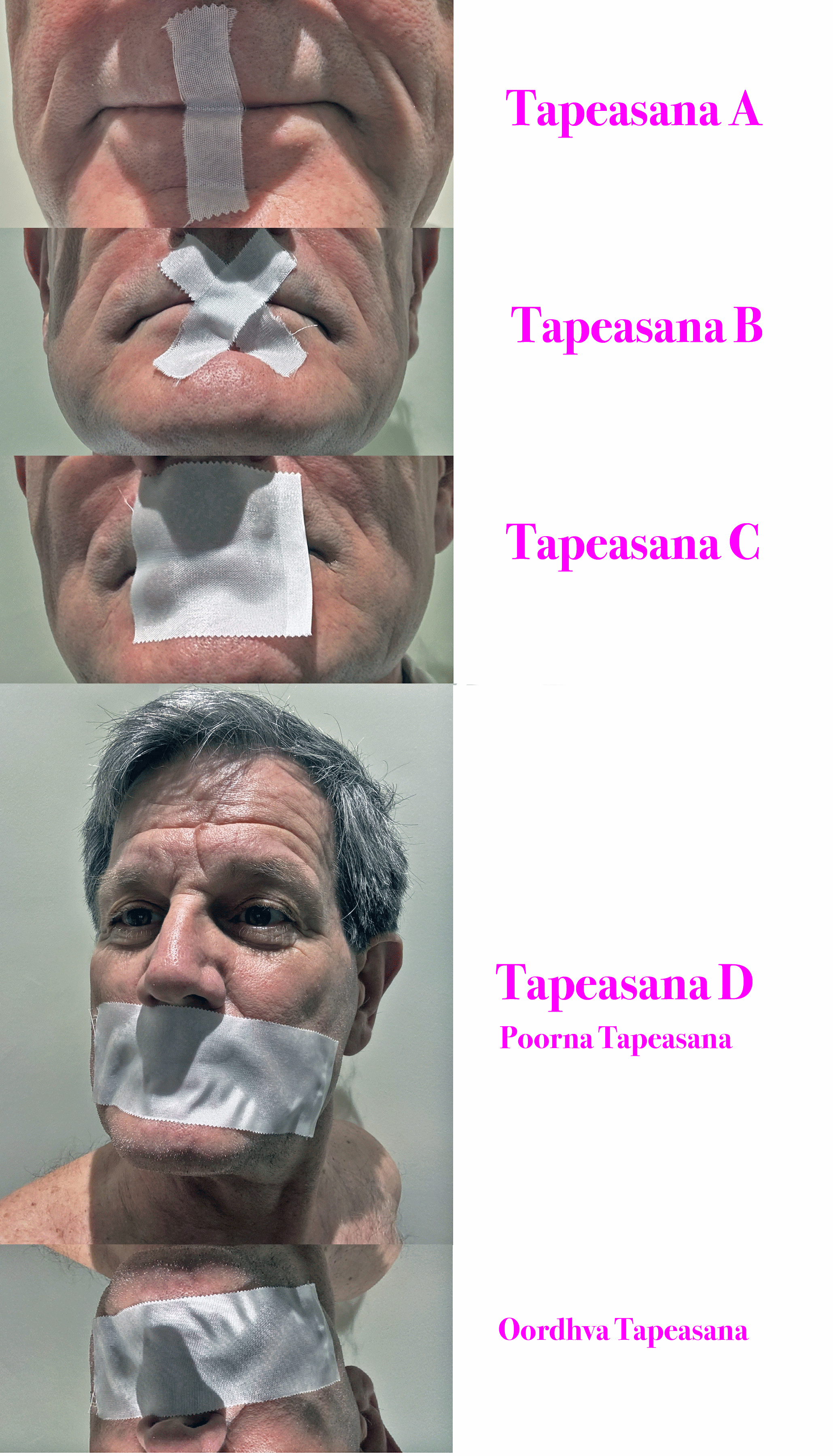
Tapeasana A : For both new people and those highly experienced mouth tapers, sometimes just a little reminder is all you need. A small vertical strip of tape connecting the lips still allows mouth breathing if needed during the night. Nothing dramatic happens. You won’t die. End of story.
Tapeasana B : provides a little more staying power, but lots of permission to breathe in and out the sides of your mouth if you have to.
Tapeasana C : 2 inch surgical tape that covers 70-80% of the mouth.
Tapeasana D : This asana is probably what Dr Sanjay Gupta is afraid of in his mind. There is never any reason why you have to get to the final posture in any asana! There is no reason you have to force yourself to arrive at "Poorna Tapeasana," because this posture, like all yoga postures, are just made up. All yoga stuff is somebody else’s experience that they experimented with, and then adjusted to fit their liking.
Oordhva Tapeasana : Cute, right? This pose actually does some really wonderful things. Fold over half way in expanded leg stretch, elbows on knees? Stop half way, when your head is at the horizon. Check in with yourself. Can you go relax with the breath into the next place and slowly turn the lungs upside down? Most of the time our bodies are upright. All the blood pools at the bottom of the lungs. Turning the lungs upside down reverses the ventilation and perfusion of the air and blood. The blood at the bottom of the lungs goes to the top.
My Experience
When I started mouth taping, I didn’t love it. I experimented with cheaper tapes and different styles. Special “mouth tapes,” and different gadgets and not necessary in my opinion. I recommend 1” silicone tape for starters, and 2” silicone tape for Tapeasana D. In the photos, I am using a free surgical tape from Blue Cross that works well enough.
The first night I mouth taped, I went straight for Tapeasana D -the whole shebang. The results were immediate. Snoring stopped. I woke up refreshed instead of drained. No dry mouth. No brain fog. No foul taste. No sympathetic nervous system on red alert all night. No more feeling exhausted in the morning. Actually what happened was the exact opposite.
Sinuses clear and ready for practice.
Full of energy and rested.
No nasty tastes in my mouth.
This taping at night practice has become important for me. I ended up shaving my beard and mustache because mouth taping and facial hair don’t mix. The chin strap idea didn't work for me. Shaving facial hair for men immediately makes this a non-starter for those whose identity is wrapped up in their beards and looking a certain way. But I was desperate to stop the mouth breathing.
I couldn’t argue with the results.
First night, instant results. I woke up refreshed and clear-headed. No brain fog. My mouth wasn’t a graveyard. No mouth breathing at night means my sympathetic nervous system isn’t on red alert. My sinuses felt sweet and open from nitric oxide flowing all night. My morning yoga practice soared. It felt joyful instead of like miserable drudgery. Getting out of bed in the morning becomes easier.
For morning pranayama practice, nasal breathing all through the night changes everything.
And the snoring? Gone. First night. And thereafter, any time I mouth tape, which is about 6 years off and on.
My partner is so grateful when I mouth tape. She quietly does the Jedi mind trick and without speaking, at night puts thoughts of taping in my head. Whatever works.
Next Steps
Try taping your mouth, if you like, when you do your next asana class. Even though you might think you are practicing ujjayi, you will become instantly aware of how many times you are reverting back to mouth breathing. It was shocking for me to become aware of how much I was mouth breathing, even when I thought I was 100% ujjayi.
~~~~~~~~~~~~~~~~
What really excites me these days is changing the way we were traditionally taught Anuloma Viloma/Nadi Shodhana into something more useful, accessible, practical and fruitful. Taking the teachings and the central practice of Swami Kripalu and bringing them alive.
After years of daily, hourly practice I am amazed at the physical results of long term Left Right Breath. I am the living proof of consistent, concentrated Left Right Breath, (Shiva Shakti Breath, if you prefer that metaphor.) I will try to answer here any questions you might have but I just got back today Wednesday. I will be presenting "Pranayama Reinvented" at Kripalu Center March 20.